Showing posts with label online learning. Show all posts

Friday, February 24, 2017

Online Learning To Advance The Learners In Each And Every Way.

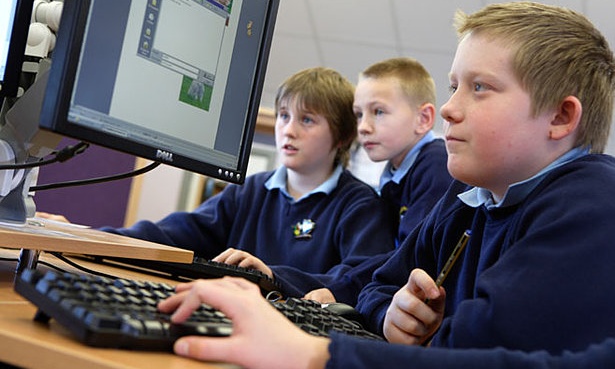
The ebb and flow challenges confronting conventional schools and colleges, including higher educational cost, spending cuts, and course deficiencies, have brought on numerous students to look for alternatives. With about three million learners at present selected in completely online degree projects and six million taking no less than one online course as a major aspect of their degree program, online training has obviously turned out to be a standout amongst the most well-known advanced education alternatives. 


Image Courtesy : bit.ly/2kT4Oum

The greater part of this implies learners, from working experts to secondary school graduates, find many motivations to take all or some of their courses on the web. The following are 10 focal points to web-based learning. 

An assortment of projects and courses: From conventional four-year colleges to totally online vocation universities, advanced education today offers an assortment of choices for learners. This implies regardless of what students wish to examine, from nursing to neuroscience, they can discover online the courses or degree programs they require. They can likewise acquire each scholarly degree on the web, the distance from a profession endorsement to a doctorate.


Image Courtesy : bit.ly/2mecozR

 Bring down aggregate costs: Online projects can be a more moderate choice than customary universities. In spite of the fact that not every single online degree have less costly net educational cost costs than conventional schools, related expenses are quite often less costly. For instance, there are no driving expenses, and now and again there is likewise no required course materials. Numerous schools and colleges have started to acknowledge credits earned by means of free huge open online courses (MOOCs), the latest progress in online instruction. Free online courses, for example, these can help understudies satisfy general training necessities at next to zero cost. 

More happy with learning condition: Commercials that highlighting on the online learners contemplating in the nightwear just skim the surface of one of the essential advantages of online training: there are no physical class sessions. Addresses and different materials are electronically sent to the students, who will then read them and finish assignments. Learners won't need to battle activity, discover parking spots, leave work right on time to go to class or miss critical family time. 


Image Courtesy : bit.ly/2mrrPRk

Accommodation and adaptability: Online courses give understudies the chance to arrange their review time around whatever remains of their day, rather than the different way. Understudies can study and work when they are at their pinnacle vitality, regardless of whether that is early morning or late during the evening. Course material is constantly available on the web, so there's no compelling reason to timetable extraordinary excursions to a library either. The majority of this makes web-based learning in a decent alternative for understudies who need to adjust their work and family duties. 

More cooperation and more noteworthy capacity to think: While there is conflicting confirmation about the rate of online understudy interest versus support in conventional courses, one thing is sure: online courses offer bashful or more hesitant understudies the chance to take an interest in class discourses or talks without hardly lifting a finger than up close and personal class sessions. A few understudies even report that online courses are less demanding to move in on the grounds that they are not occupied by different understudies and classroom action.

Monday, December 12, 2016

How Important Is Distance Learning For Advanced Education?


We have been utilising innovation so much nowadays in every single space of our lives, be it education or the general family work, that have we ever taken out a moment to think about whether it's leaving a positive effect on our work or it's simply that we have been depending a lot on it that we've turned out to be chronic to it, overlooking the heading of its effect? 

Say, for example, is innovation making education enhance after some time or have we quite recently been making up for lost time with the pattern of educational innovation? 

Image Courtesy : bit.ly/2huLbqx

Earlier, innovation in education was a begging to be proven wrong subject among the general public. Everybody had their own perspectives on modernising education and making it innovation helped. There were a colossal number of positives and negatives to education innovation. However, slowly as innovation was grasped by the educational foundations, they understood the significance of innovation in education. Its positives dwarfed the negatives and now, with innovation, education has taken a radical new implying that it abandons us with most likely our educational framework has been changed inferable from the regularly propelling innovation. Innovation and education are an extraordinary blend if utilised together with a correct reason and vision. 

To clarify on the point of this article, I am more than clear that innovation enhances education, all things considered, and it has now turned into a requirement for upsetting education to improve things. 

With innovation, instructors, students and guardians have an assortment of learning devices readily available. Here is a portion of the routes in which innovation enhances education after some time: 

Educators can team up to share their thoughts and assets online: They can speak with others over the world in a moment, meet the inadequacies of their work, refine it and give their students the best. This approach unquestionably improves the act of educating. 

Students can create important research aptitudes at a youthful age: Technology gives students prompt access to a wealth of value data which prompts to learning at much faster rates than some time recently. 

Image Courtesy : bit.ly/2gQC3sd

Students and educators have admittance to a region of material: There are a lot of ingenious, solid sites accessible on the Internet that both instructors and students can use. The Internet likewise gives an assortment of learning and doesn't constrain students to one individual's supposition. 

Online learning is currently a similarly tenable alternative: Face-to-face association is tremendous, particularly in the more youthful years, however, a few students work better when they can go at their own particular pace. Online education is presently certifying and has changed the way we see education.
There are numerous occasions till date where we can see the change in education, once it grasped innovation. I will express a couple of striking ones of them to furnish you with a more reasonable photo of the entire situation. Here's the rundown alongside the references to the firsts: 

The Flipped Classroom: This mainstream innovative approach has gotten to everyone's ears at this point. It is a practice in which, students watch address recordings as homework and discourse are carried on them in the class-time by the educators. It has brought about an amazingly better understudy execution, with discernible review help up. Students can now learn at their own pace and spare class-time for connection.

Adequacy of EdTech on Mathematics for K-12: Technology has ended up being powerful to make students effectively adroit with Math. Out of a few, there are three surprising advancements, which as I would see it ought to be conveyed to the light. PC oversaw learning is a program that utilizations PCs to survey understudy learning on Math and appoint them with proper Math material, which they can chip away at to score and get a graph of their advance for self-evaluation.

Educational Technology enhances understudy learning results: Evidence recommends that educational advances can enhance understudy accomplishment, insofar as such instruments are coordinated insightfully into instructing and learning. At the point when advanced capacities like, online situations are consolidated genuinely into a guideline, students have new chances to learn and accomplish.

The impact of innovation on education relies on upon the outline of direction: The plan of the guideline represents more change in how and why individuals learn than the innovation used to convey the guideline. Teachers and educational specialists ought to be urged to concentrate on deciding how to better coordinate the utilisation of an offered innovation to encourage learning, instead of inquiring as to whether it works or in the event that one is more compelling than another.

Wednesday, November 16, 2016

Are Online Degrees Esteemed As Highly As Traditional Degrees?

If your online course is attributed by a renowned university, your degree should be regarded just as a traditional degree would be.

Before selecting a program it’s imperative that you evaluate your preferred institution's standing and the status of your selected learning program. If possible, ask your friends and colleagues what they think of your choice and find some existing students or graduates to give you an insider’s viewpoint on the course.

Image courtesy : bit.ly/2f2VSLh

Online top-up degrees are an excellent alternative to making the spring from your current career into a business management position – but what benefits do they award over other courses? And how do they help contestants develop their careers.

If you already have a foundation degree or HND, top-up degrees are a means of advancing into the ultimate year of an honours degree. In the domain of business management, they render a comprehensive method of promoting your career potential when you think you’ve hit a plateau – if, for instance, you crave to be recognized for positions where an honours degree is one of the requirements, or if you’re looking to give yourself an edge over other applicants.

Nowadays, obtaining credits or earning post-secondary programs online is not an oddity. In 2012, an approximated 85 percent of traditional residential learning institutes proposed higher educational programs through distance education. A little more than one-third rendered whole degrees online. 

E-learning is no longer the future. It’s right now. Organisations are adopting distance learning in large numbers. Unlike a decade ago, employers no longer automatically recognise digital degrees or distance learning as inferior or substandard. 

Online Degrees Are Earning Admiration

As a result, there is no necessary to explain in a cover letter or resume that you “gained your degree online.” Details about why you decided any particular type of school—such as a private Institute versus a government Institute or a Christian school versus a secular school—are best left to criticism during a substantive interview. 

Image courtesy : bit.ly/2fjooZT


Even then, you’ll only want to consider the issue of distance learning if asked.
We say "if asked" because research shows that most employers are not overly bothered about how a degree was obtained. They are, nevertheless, very interested in all-embracing school status and the quality of knowledge that is being imparted.

Do Employers Respect Online Degrees?

Eventually, the name of your college and the nature of degree you have gained is going to be much more significant to your employer than the process by which you obtained your degree—off-campus or traditionally. 

It's important to keep in mind that two sorts of educational institutes issue such degrees: those that are online-only and those with campuses that also offer online education programs.

Expect to confront no stigma if the educational institute you joined is already acknowledged by your employer and valued by your employer for the excellence of its graduates. For most people, this means attending an online program administered by a college with a long and appreciated tradition of teaching learners via a local residential campus.

Thursday, January 22, 2015

Should Schools Focus More On Technology Than Curriculum?


Educational technology has become a reality in our schools with more and more institutes offering various digital tools to their students to help them learn better. The main objective of using advanced technological tools in the classroom is to create an enhanced learning environment and offer and engaging and interactive experience. 

However, before we focus on technology integration, educators first need to focus on a flexible and effective academic curriculum. It is only then that we can identify the means and approaches to improve education with the help of technology. But schools should not force digital tools in the classroom. Technology must facilitate the goals of the educators for the school year. If it is not used properly, technology might become a barrier to achieving those goals, instead of being a catalyst. 

Implement Technology To Improve Curriculum
 
Do you think your school is ready to use educational tech in the classroom? The first thing you need to do is be confident that your curriculum will be enhanced by implementing technology. Here are 5 excellent ways to use technology to improve learning by elevating the curriculum- 

Understand How Technology Is Used By Students At Home
 
It is imperative that you learn what type of technology is used by your students and how they are utilizing it outside of your classroom. This information will enable you to identify challenges and opportunities related to executing EdTech tools in the classroom. It may also help to initiate motivation for your tech solutions in school.

Be Sure About Your Goal
 
You need to determine the purpose and objective of using latest technology in your classroom. Make sure you don’t implement it just for the sake of using EdTech or because other schools are doing it. If you don’t realise why or how you should use technology as an educational tool, then it simply means you are not ready for it. 

Take One Step At A Time
 
You need start by implementing just one educational technology at a point of time. When you implement multiple technology tools, then it become easy to lose focus of the main objectives and enhance the curriculum. If you try to use too many digital tools at once then it can prove to be overwhelming, not only for the educators, but also for the learners and their parents. If they start to feel overwhelmed then it may cause frustration which will adversely affect your goals.

Use The SAMR Model


Designed by Dr. Ruben Puentedura, the SAMR model depicts the phases of technology integration, namely –
  • Substitution
  • Augmentation
  • Modification
  • Redefinition
This approach enables schools and educators to evaluate and reflect on how to implement technology in the classroom and what we can do to adapt, reformulate and modify our classrooms by using it. 

Look For Opportunities For Professional Development

 
You can find innumerable free online learning resources for administrators and educators to read regarding different tech experiences and what we may learn from them. This can be highly effective if your school is connected with larger networks which can allow colleagues to learn and share the best teaching practices.

What are you doing to Integrate technology into your classroom? Share your views, ideas and thoughts with us by commenting below. We would love to hear from you. 

Article Source: bit.ly/1ISJryX

Thursday, August 28, 2014

What An Online School Can Do For Your Overall Development

With the evolution of technology, online learning has gained significant momentum among learners as well as professionals worldwide. As online school programs offer excellent flexibility and convenience, you can easily earn a postgraduate degree without making any severe changes to your personal or professional life. But can web-based learning help you in your overall development other than just providing a recognised degree? Yes, it can. Read on to find out..... 

Source: bit.ly/XUTmP4
More Than Just A Degree 
 
I am sure you know how intensely competitive the job market has become. Nowadays recruiters want applicants to have something more than just a degree. So it is imperative that you gain some additional skills to get an edge over others. Careers Advisor Susan Hughes of the National Careers Service believes since the past few years more and more employers are searching for candidates who show emotional intelligence. 

Be Present Online
 
I think creating a noteworthy online presence is one of the simplest ways to do this, while developing sector knowledge. Social networks, online forums, websites and online Q&As with business experts can help you to communicate with prominent individuals in your preferred sector and expand your network. 

This is where the training from your online school comes in. During your study for an online postgraduate degree, you will have the opportunity to communicate with your fellow classmates and teachers through various online modes like chatrooms, forums, video chats, social media etc. This not only helps you to connect with your peers and seniors effectively, but you will also learn how to use social networking for expanding your network. Moreover you will also get the opportunity to meet new people from your industry who may open new doors for your career in the future. 


Start Blogging, It Helps
 
Apart from these, blogging is another excellent way to make new connections. Harriet Tuson, a graduate from the University of Bristol, managed to write articles for the academic website Experimentation, even though she worked part-time to support her master's degree in management, finance and economics. As she had a biochemistry undergraduate degree, she pursued her interests by writing about the latest trends in the sector. This became an advantage for her when she was employed in a pharmaceutical consultancy. 

Tuson says, “Some of the articles I'd written related to my job, which showed I hadn't just left uni and applied for anything I could think of but was really enthusiastic about the role.” 

Work Experience- A Must Have
 
In a similar way, your work experience also becomes a crucial factor when applying for a job. As online school programs are highly flexible, you can pursue your studies from your home. Moreover, as the learning material is available online, you can easily access it any time you want as per your convenience. This gives you the scope to get a full time job in your desired field and gain relevant work experience. You can easily work throughout the day and continue your studies at night or in the early morning. You can even choose to study from your office by accessing the content from your tab or smartphone. The biggest advantage is that you can instantly apply whatever you have learned into your work and increase your productivity. 

Don’t Be Sector Specific
 
Online education also gives you the scope to gain skills that are not exactly sector specific. For example, Olivia Keenan engaged herself with several teaching roles and outreach programmes to evade getting trapped in only one field, while she was pursuing her master's from the University of Southampton. 

She says, “I'm doing a PhD in astrophysics, which will be fantastic if I decide to stay in academia, but what if I decide I don't? And don't want to be an engineer or a programmer? Unfortunately a lot of companies still subscribe to certain subject stereotypes, which means if you study in a science or maths based field they may assume that you lack people skills.” 

Keenan believes all students pursuing a postgraduate degree should think about this factor as it will make them more knowledgeable about various fields and more confident. She adds “Try and think of the stereotypes your degree conjures up and do something which proves that you break the mould.” 

Thus if you want to garner varied skills and experience, your online postgraduate programme can provide you the opportunity to expand your knowledge and gain employability skills like management, teamwork, leadership and adaptability. 

What do you think? How else can your online programme help you in overall development? Share your views, opinions and concerns with us. We would love to hear from you.

Thursday, July 17, 2014

How To Use Google Glass In The Classroom


Source: bit.ly/1qhLsMa


Innovation in learning and education has traditionally faced many challenges. Teachers and students have always followed proven methods when it comes to education. However the scenario has started to change, especially after the advent of online learning and MOOCs. Google has always been popular for innovations and its latest presentation, the Google Glass, might drastically change the way we teach and learn in the future.
Google Glass may not be widely popular yet, but it is undoubtedly gaining ground. The entire concept of having a display in front of your eyes providing you information in real time, which still seems somewhat like science fiction, have certainly grabbed the attention of several people, including me. But being in the education field I started thinking how can Google Glass be used to improve education. The fact is it can be used in quite a few ways in the classroom.
The features offered by the device have massive capabilities which can used be along with some unique classroom based ideas to help students learn better. Although some ideas may not be suitable for particular institutes, but it can definitely help several classrooms. How? Let’s have a look...
Google Glass in Education
This unique and innovative device has great potential which can help us to take education to a completely new level. Let me point out a few excellent uses of the device in education-
  • Remote Teaching
  • Providing Supplementary Material for Lectures
  • Helping in Student Orientations
  • Helping in Monitoring Students
  • Offering a Close Look at Lab Work
  • Helping in Better Medical Training
  • Documenting Field Trips
  • Helping to Learn While Participating
  • Providing Tutorial Videos to Students
  • Helping in Student Performances and Presentations
  • Enabling To Record Lectures In Classes
  • Helping in Monitoring Attendance
  • Assisting Teachers to Capture Notes
  • Helping in Remote Project Work by Student Groups
  • Assisting In Performance Evaluations
But these are only a few uses of Google Glass in education. When used properly, the device can prove to be highly beneficial for campuses and classrooms. Let’s read how-
Enabling Teachers for Better Lectures
Educators can wear the device while giving lectures and start Google Hangouts with students who may participate in the sessions remotely. Google Glass may also be used as a back-up resource for the teachers to gather detailed and unplanned content when asked by the students.
Helping Students to Understand Lectures Better
Students attending the lectures may use the device to bookmark essential sections, take notes and even access additional content offered by the lecturer. It can also help foreign students to have real time translations while the lecture is being delivered.
Simulated Field Trips
It can be used to provide simulated and interactive field trips to students, especially for places that are hard to access like Federal Reserve Bank, LHC at CERN, Mountain ranges, war zone experiences, the White House and even outer space.
Providing Location Specific Information
Google Glass can help to try out QR codes throughout the campus and provide location specific information as the device can instantly interpret QR codes.
Offering Self-Guided Tours
Glass can be offered to prospects and visiting students to provide self-guided tours of college or university campus. It can automatically identify landmarks, detail the history of the institute and answer student queries.
Improving Sports
Google Glass may also be used in school or college sports and athletics like basketball, tennis, baseball, football etc. The players can use the device while playing and receive real time instructions from their coach. Students can also view video recordings of their performance to identify their strengths and weaknesses.
Do you think I missed something? Can you think of any other uses of Google Glass in education? If you have some other ideas then feel free to share with me. I would love to hear from you.

Article Source:  bit.ly/1qhLsMa

Sunday, April 6, 2014

Oppia- Google’s New Online Interactive Educational Project

Source: bit.ly/R01jPG
In the present day, technology has become essential in the development of education all over the globe. Various new technological tools are being introduced continuously for the betterment of teaching and learning. These modern tools have made education interactive and engaging that helps the teachers as well as the learners. Google has actively participated in the advancement of education over the years and has significantly contributed towards reforming the process of learning. The company has extended its influence in both and traditional and online classrooms through Google Apps for Education, Chromebooks, Android and Play-powered tablets as well as its support to online courses and MOOCs.

Google has recently launched Oppia, a free interactive online learning platform that is set to modify the way we teach, interact, learn and share knowledge. It is an educational tool with quick feedback which lets you take lessons depending on the answers you provide. Oppia is an Open Source project that lets its users develop new online academic activities via web interface. Both teachers and students will be able to share their opinions, teach and learn through presentations, mapping and drag and drop options.

Source: bit.ly/PKn05j
Oppia assumes the function of a mentor and asks relevant questions of the users and thus improves interactivity of the platform. The response of the learner to the questions will then help the teacher to determine how to move forward with the lesson. Google said that it is a smart feedback system which aims to teach the users to learn various topics and skills.

One of the strongest points of Oppia is its interactivity which many tech-based learning tools lack. This interactive feature is known as Explorations. Students and teachers can communicate with one another with this online platform easily. Explorations are basically interactive educational activities which you can create from anywhere in the world and help others to learn from it. As the platform is developed for everyone, you will not be required to have any programming knowledge for creating the explorations. The users can create interactive lessons with text, numerals and multiple choice options. It also supports specific tools like a code evaluator and a clickable map.

Oppia gathers data how students and other learners interact with the content and the explorations. This information is then provided to the exploration authors, so that you will able to fix the mistakes in the lessons. This will help the interactive feature to gradually improve and help the users to understand the lessons better. You will be able to improve the explorations as you gather more information with time. Moreover, you can also embed the explorations into websites. Apart from these, the learners will also receive personalised feedback after they submitted the answers on the explorations.

Source: bit.ly/PXICuQ
Google said that the motivation for Oppia came from the fact that most of the other online educational tools are asynchronous and static in their content delivery. Presentations and video lectures are not interactive enough and thus they usually fail to encourage active participation, dialogue, discussion, and student feedback. Google assures that the intelligent feedback system of Oppia will enable the teachers to modify their explorations through feedback of the learners and the answers they provide.

Furthermore, you will also be able to collaborate with other users to create or modify explorations and the platform also allows to associate different parameters with different learners. As a result, you will be enabled to develop deeper and better interactive lessons.

However, as of now, it is not certain how much support Google will provide for the improvement of Oppia. Its homepage clearly mentions that Oppia is not an official Google product. This indicates that the multi-national corporation has no intention of investing too many resources or manpower into the development of this project. Google is now expecting that computer experts and developers from around the globe will take charge of the educational platform and eventually the online community will look after the repair and maintenance of Oppia.

Nevertheless, the fact is the online educational platform is a useful and learning tool that will surely help a lot of students and learners worldwide. In the near future, the system may also be used for variety of purposes other than education like an extensive feedback system for teachers and companies.

Article Source: bit.ly/1jpSE2j, tcrn.ch/1cURD03,